


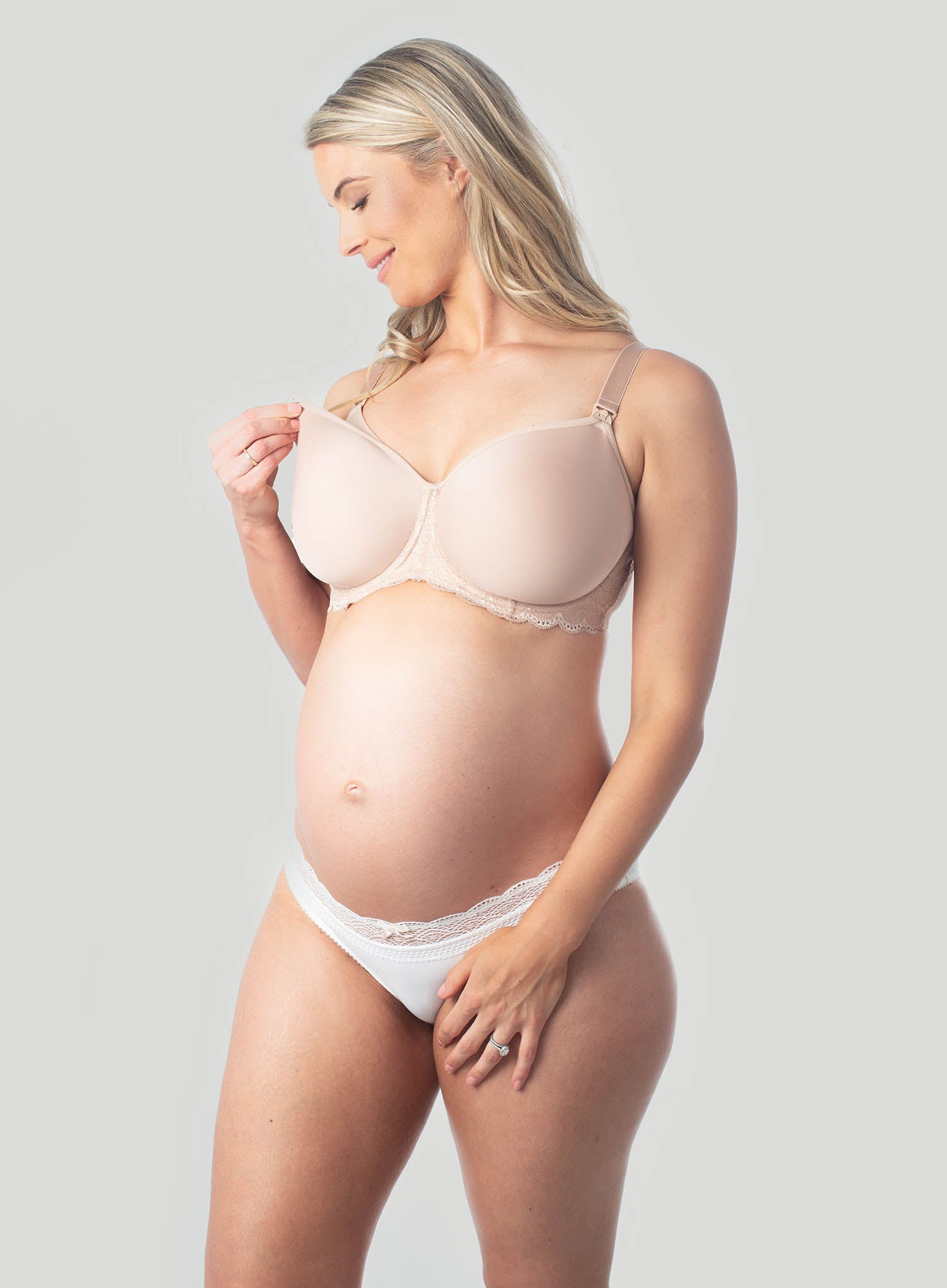

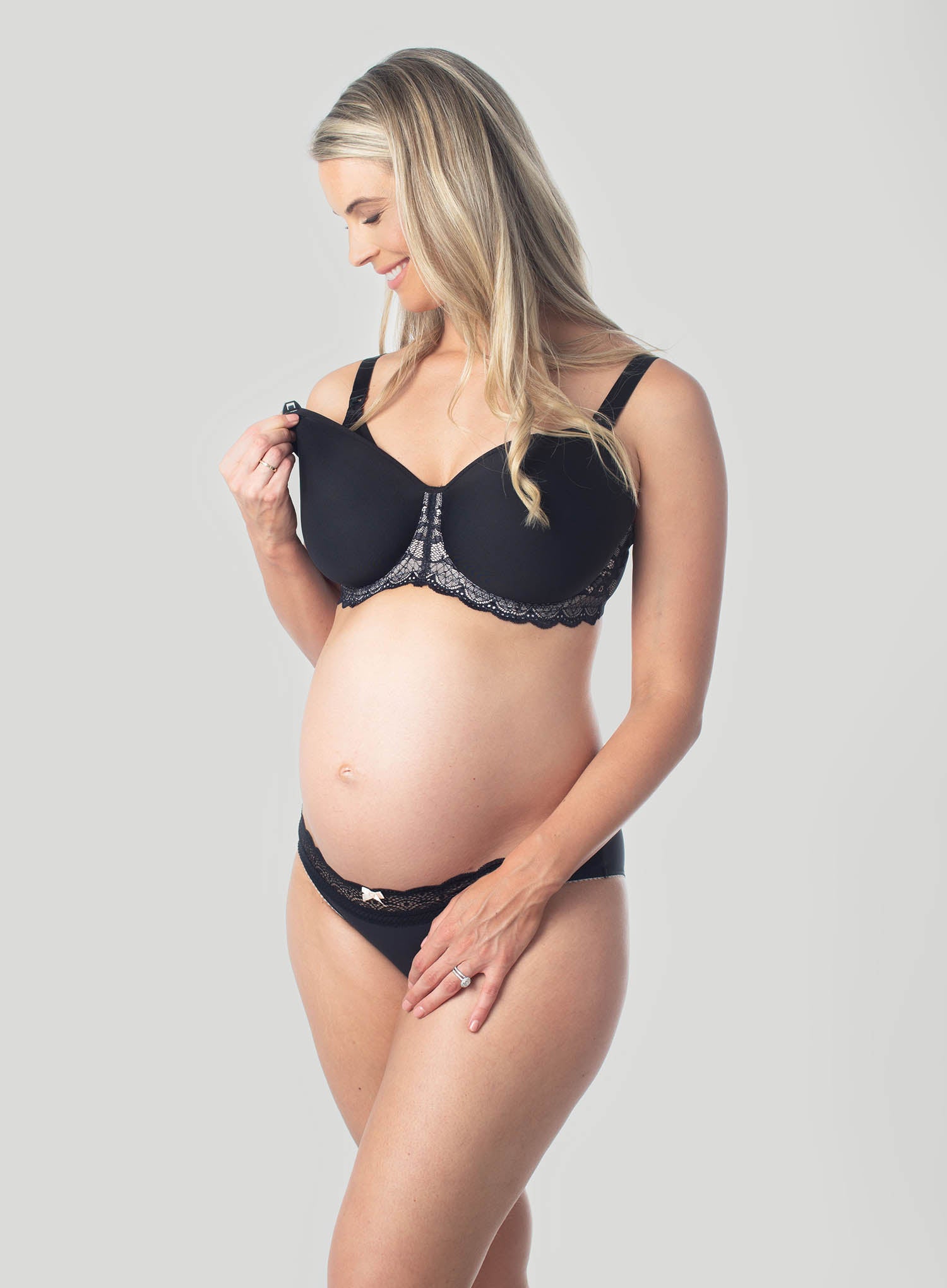

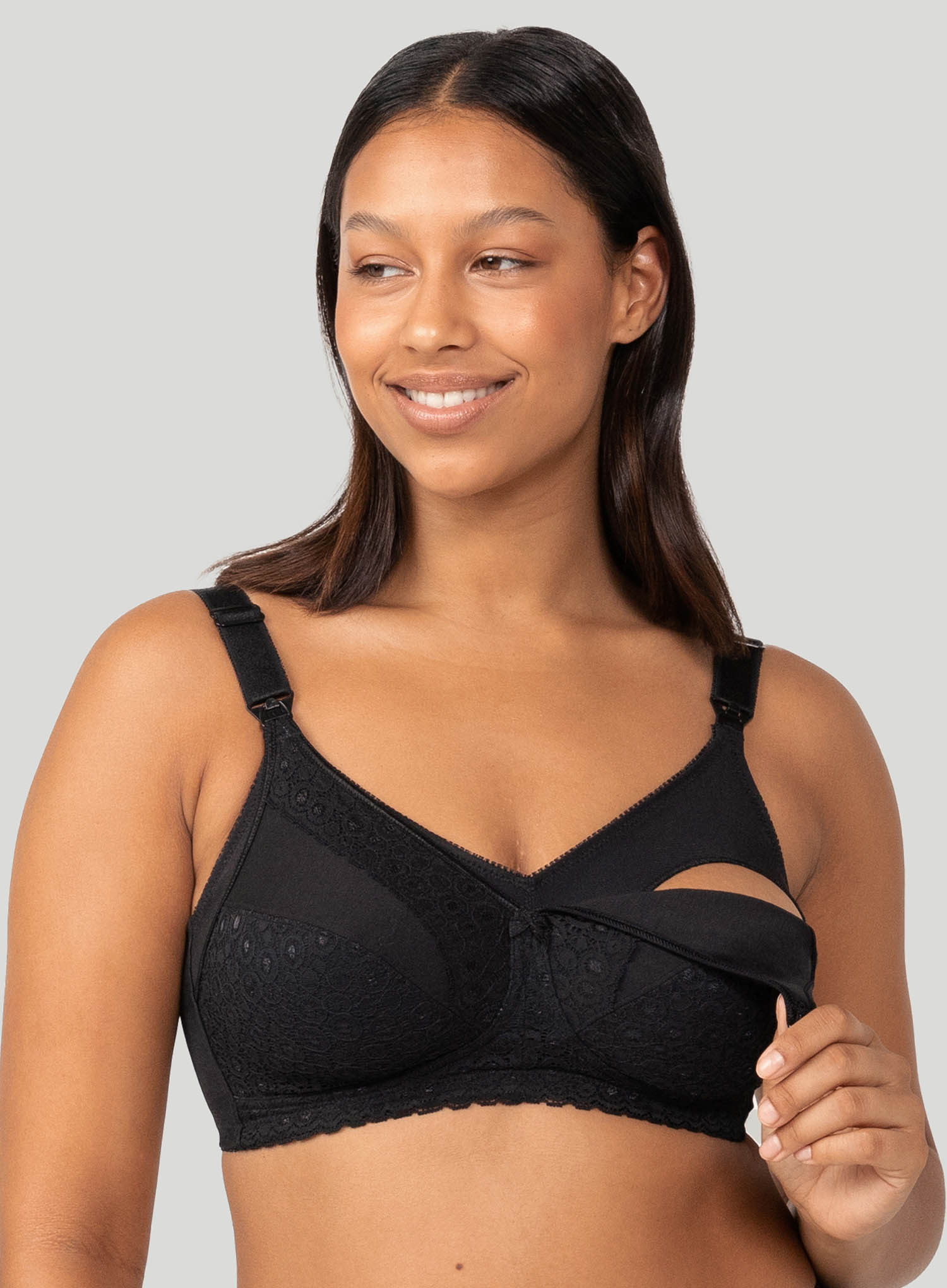


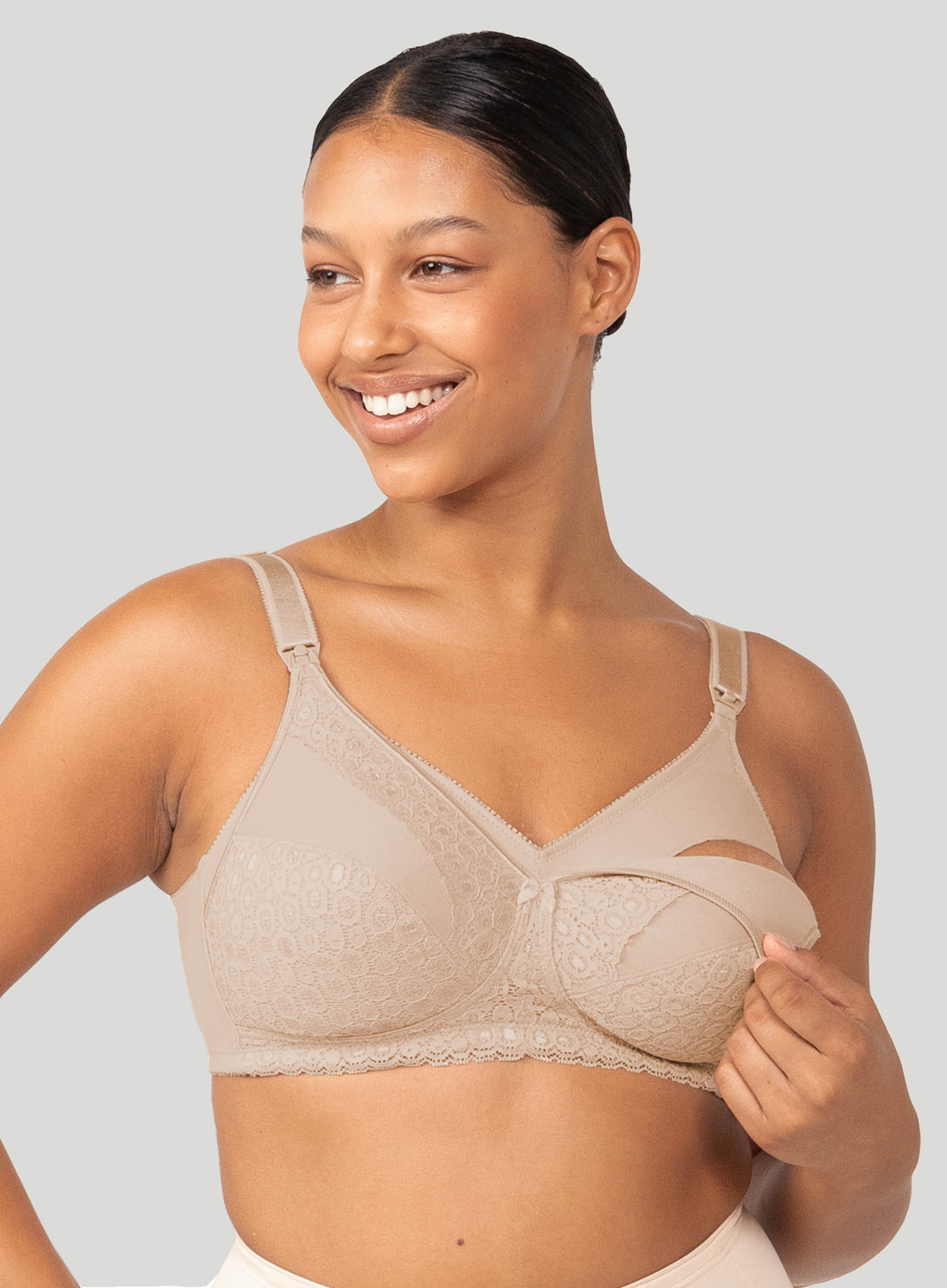


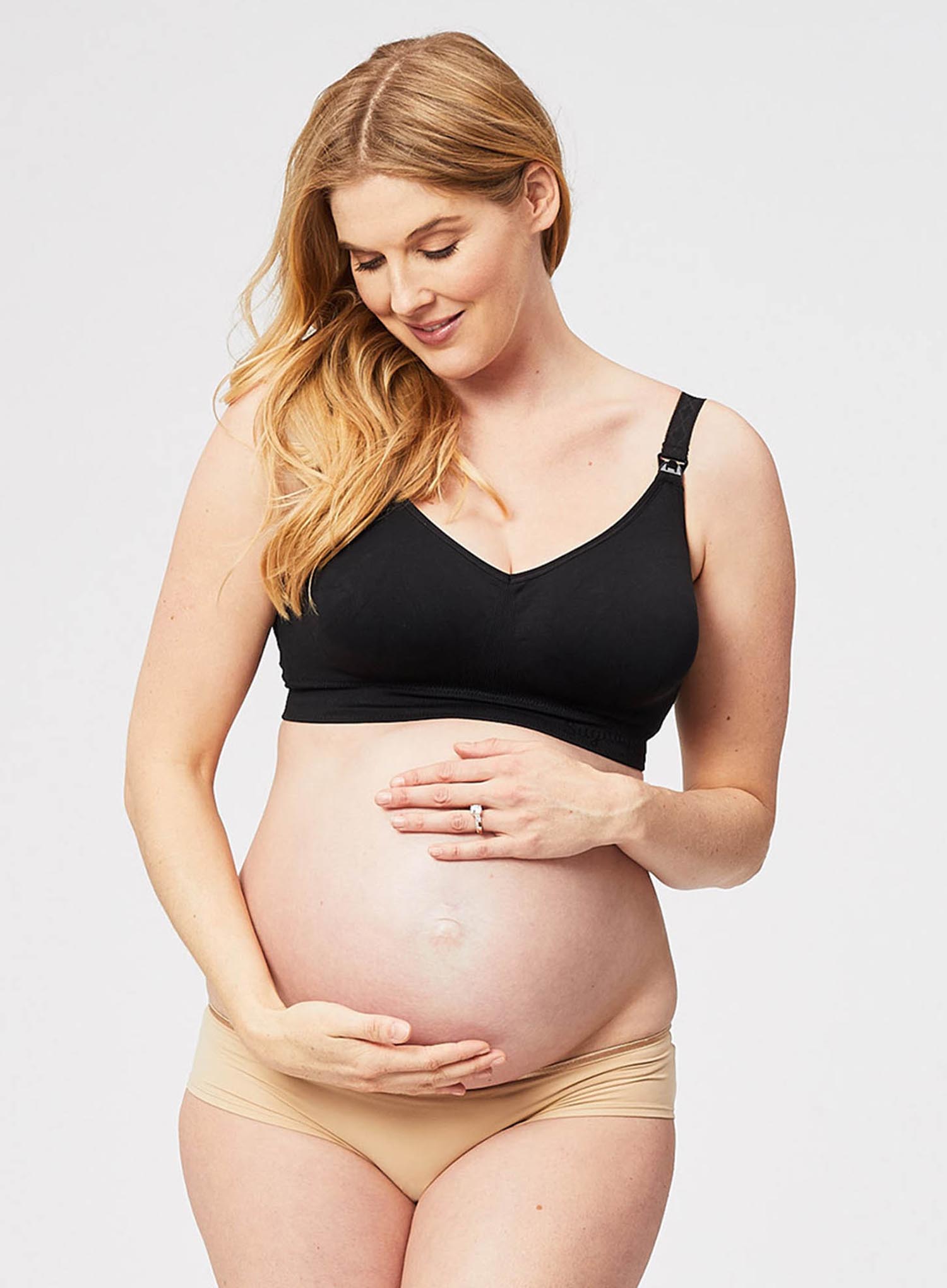

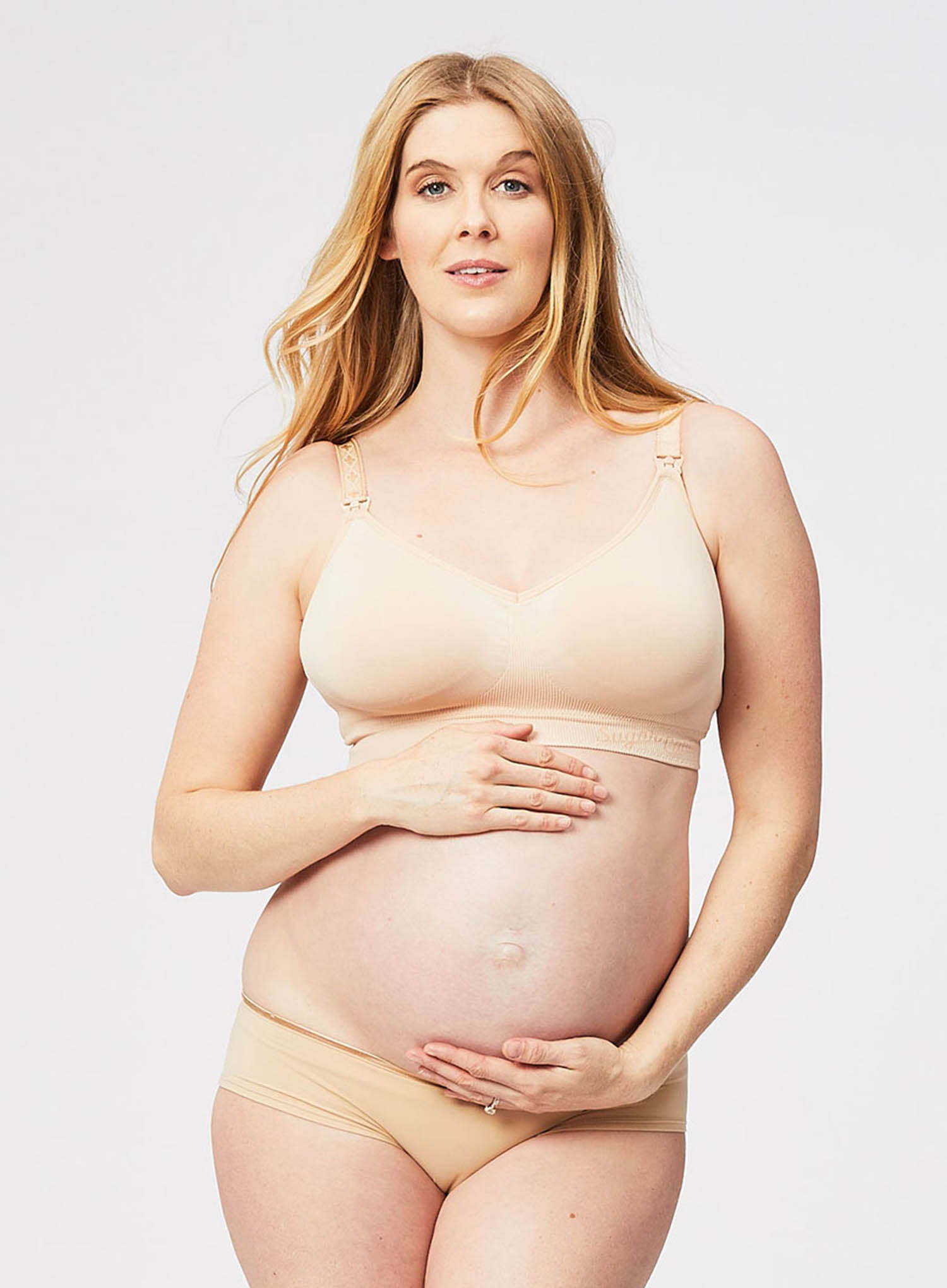

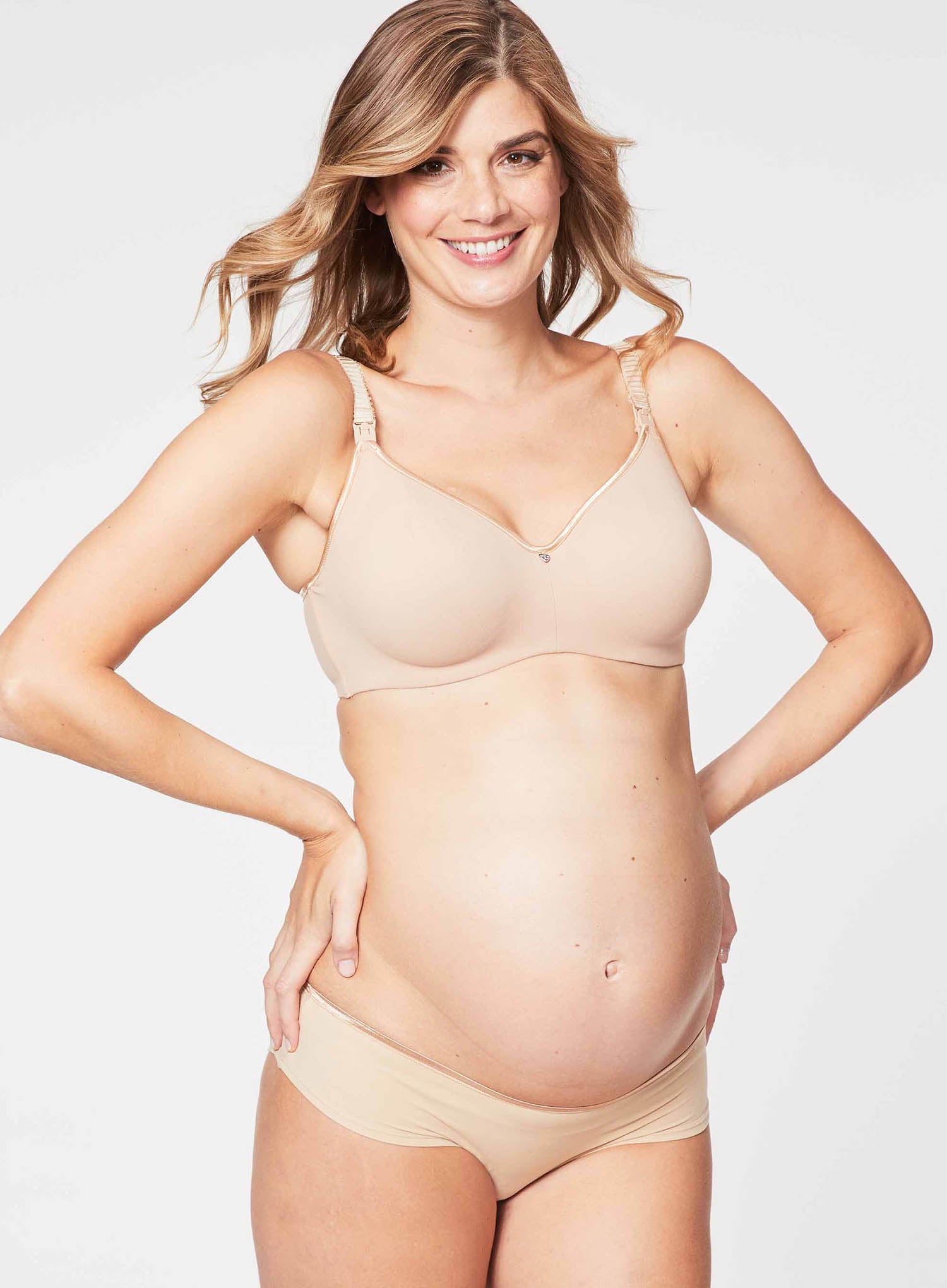


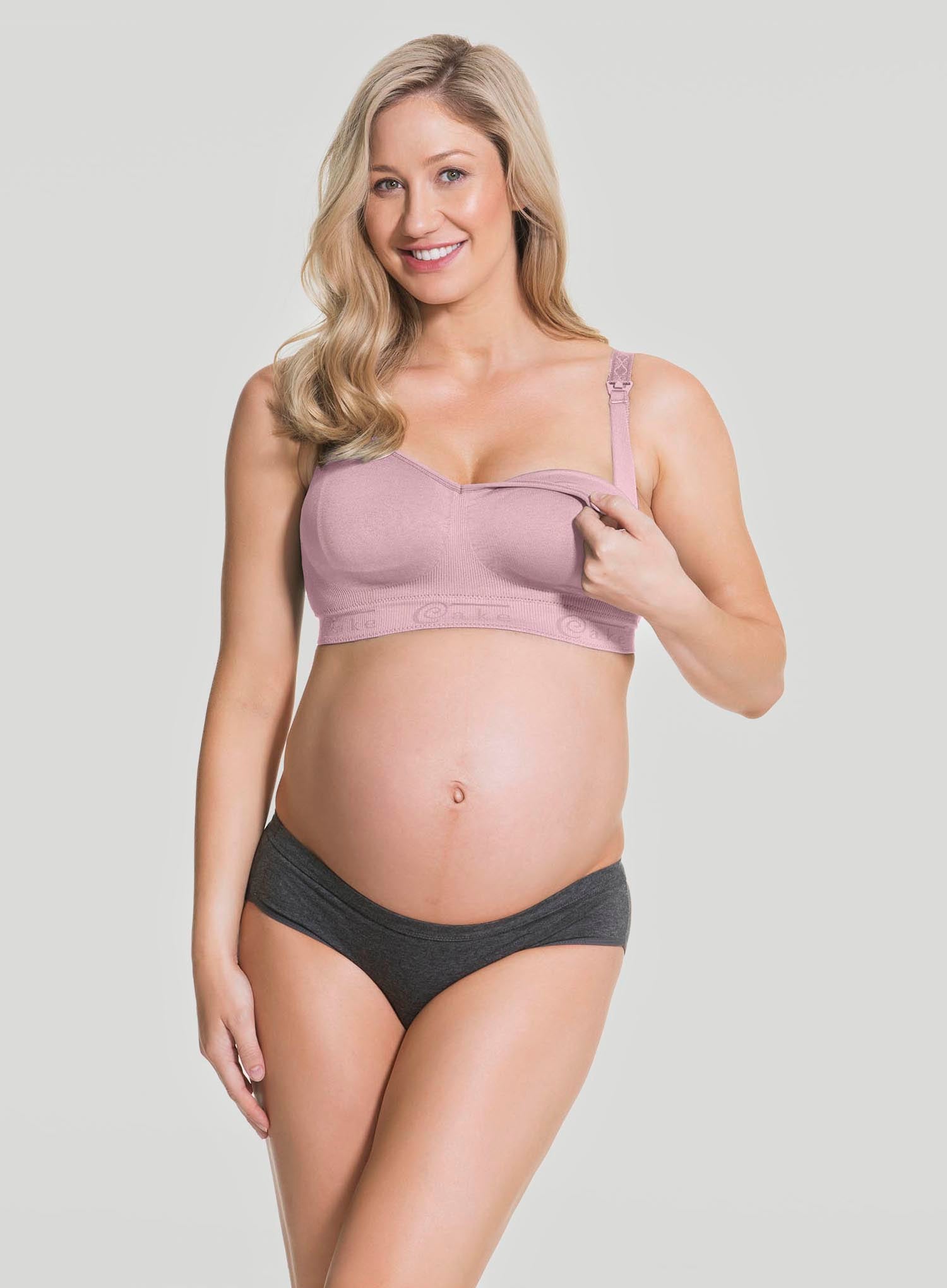


Feeding a baby is far easier when your bra works with you rather than against you. These are our plus size nursing and breastfeeding bras, made with drop-down clips so you can feed one-handed, and cup-sized for a fuller bust right up to a KK cup. You will find soft wire-free styles for the early weeks and overnight, and gentle flexi-wire designs that give a bigger bust more lift, from the labels that specialise in fuller figure feeding. Whether you are stocking up before the baby arrives or replacing bras that no longer fit, these nursing bras are made to support you through breastfeeding and beyond.
What Makes a Nursing Bra Work
The feature that defines a nursing bra is the clip: a cup that unhooks and folds down so you can feed without taking the whole bra off, ideally one-handed while you are holding your baby. Beyond that, a good one is made for a body that is still changing. It uses soft, stretchy fabric that copes with your size shifting as your milk comes in and settles, and it avoids anything that digs into tender tissue.
That is why so many feeding bras are wire-free, especially for the early weeks and for sleep. For a fuller bust that wants more lift, flexi-wire styles use a softer, more flexible wire that supports without the rigidity of a standard underwire. Both work well; it comes down to how much structure you want.
How Many Nursing Bras You Will Need
It is worth having more than one. Between daily wear, washing and the occasional leak, most people find two to three nursing bras the practical minimum, often a mix of a daytime style and a softer one for night. Buying a small rotation also means you are never caught without a clean, dry bra, which matters more than you might expect in the early weeks.
A common approach is one or two supportive day bras plus a soft sleep or wire-free style, then adding more once you know what you reach for most.
Getting Fitted for Feeding
Your size can change more than once around birth, so timing helps. Many women get fitted in late pregnancy, around the final weeks, when the bust has settled into a pre-feeding shape, then reassess once feeding is established. A fitter will allow a little room for your milk coming in rather than sizing you too snug. Our team does this every day, in store or over Zoom, and you can check yourself at home first with our how to measure guide. You can also browse the wider plus size maternity range for pregnancy pieces, and the full maternity collection for sleepwear and more.
Frequently Asked Questions
When should I buy nursing bras? Many women buy their first nursing bras in the last few weeks of pregnancy, fitted with a little room to allow for their milk coming in. Because your size can keep changing, it is normal to be refitted once feeding is established.
How many nursing bras do I need? Most people find two to three a sensible starting point, so you always have a clean, dry one while others are in the wash. A mix of a supportive day style and a softer sleep or wire-free style covers most needs.
What sizes do your nursing bras come in for a fuller bust? The range is fully cup-sized for a fuller bust, right up to a KK cup, with a broad span of band sizes. This means a larger bust is genuinely supported rather than squeezed into a stretchy generic size.
Can I wear an underwire nursing bra, or should it be wire-free? Both are fine when correctly fitted. Wire-free styles are soft and comfortable, especially early on, while flexi-wire gives a fuller bust more lift with a soft, flexible wire. A fitting helps you decide what suits you.
Get Fitted at DeBra's
Feeding is a big enough job without your bras adding to it. Our team offers free in-store fittings and virtual Zoom appointments, so you can get the right size and choose between wire-free and flexi-wire feeding styles with expert help. Book a free fitting appointment and we will help you find nursing bras that support you and make feeding easier.
